
India’s STEM ecosystem is steadily strengthening, with growing student interest and rising participation. Online STEM enrolment increased by 12% in 2023–24, and higher education continues to see strong demand, with over 42% of students opting for STEM fields. While research and faculty representation remain limited, school-level trends are encouraging—Class 12 science pass-outs doubled from 13.4 lakh in 2013 to 28.1 lakh in 2024 (especially girls). These shifts highlight the need for more hands-on, experiential learning environments that spark curiosity and sustain long-term engagement in STEM for all learners.
In an era where 21st century skills of the young ones through creativity, problem-solving, and innovation define future success, traditional and conventional method of learning method is somewhere lacking to address these skills among the students. Hence, it becomes challenging for the teachers to meet the needs of our young learners in today’s race of technology and innovation. Today’s classrooms must go beyond textbooks and inculcate the spark of exploration, experimentation, and imagination. This is exactly what the ‘spark’ campaign aims to achieve.
‘spark’, launched under the Integrated School Development Programme (ISDP) by United Way Bengaluru, is designed primarily to empower teachers by enhancing their teaching–learning methods through experiment-based, hands-on experiments and instruction. spark is STEAM based learning approach aims to shift classrooms from traditional, lecture-oriented models to dynamic Learning Centers where teachers demonstrate concepts using practical activities through models and students learn through “Learning by Doing” approach. spark also identifies gaps in existing teaching practices and strengthen teachers through interactive, experiential methodologies that break monotony, improve conceptual understanding, and make classroom learning more engaging and effective for students.
Why Spark Outshines Traditional STEM Labs

spark integrates with four key components
- Miniature working models which has two aspects – demonstrative models to explain complex concepts by the teachers and experimental models for the students
- Digital Platform to have audio visual learning process where Digital tools and videos are available to complement teaching process by the teachers
- Ready-to-use workbooks for the students to engage with experiments and learnings and write their observations and findings with their peer group
Empowering teachers on experiential teaching methods
These components, along with structured demonstrations, not only support teachers in creating engaging and curiosity-driven classrooms but also strengthen student participation and peer learning.
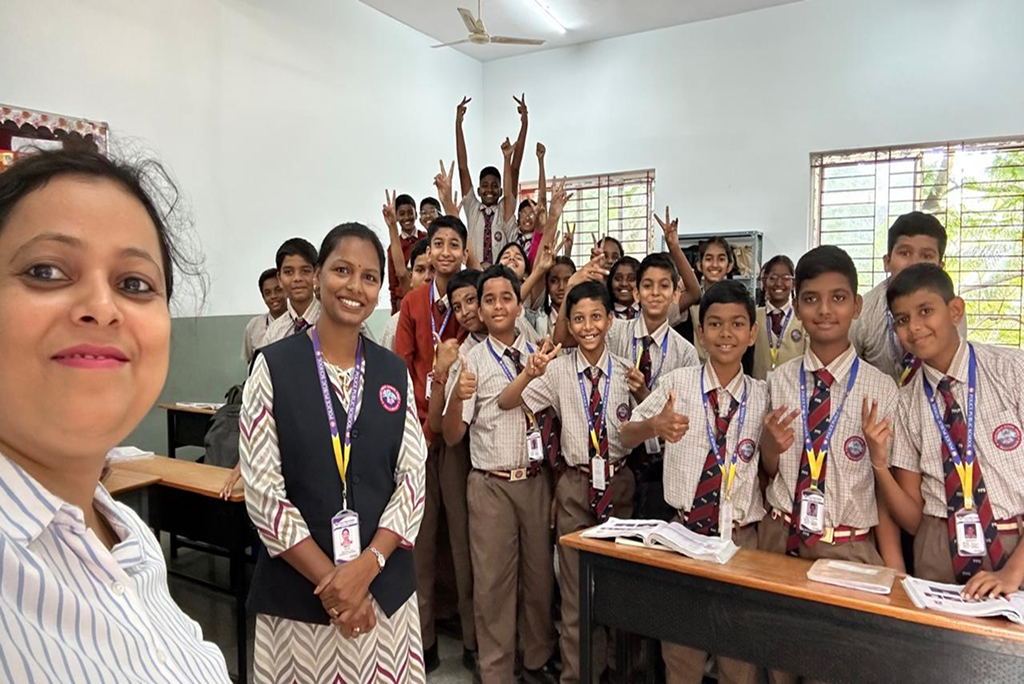
Through spark, United Way Bengaluru is reintroducing a hands-on, experiential teaching–learning approach at Police Public School, Bengaluru. The model aims to provide underprivileged students with meaningful exposure to practical, skill-based learning, encouraging them to explore technical knowledge and aspire toward stronger academic and career pathways.
By nurturing these abilities early, spark contributes to improved livelihood opportunities for students and supports broader national development goals.
Impact
In the coming months, teachers will become more confident facilitators of experiential learning, equipped with models and demonstrations that makes classroom teaching more interactive and effective. They will increasingly rely on hands-on methods to explain complex ideas, resulting in improved lesson delivery, deeper engagement, and stronger classroom management. As teachers continue to use spark miniature models and consumables, their ability to create joyful, inquiry-driven learning environments will grow significantly.
As a secondary impact, students will begin to explore concepts rather than memorize them through rote learning. With opportunities to touch, test, and observe models, they will gain deeper conceptual understanding and long-term retention. Classroom participation and peer learning will rise, and students will develop greater curiosity, confidence, and problem-solving skills. Over the period of time, these experiences will motivate them to pursue technical knowledge and future career pathways aligned with STEM and STEAM fields.